What Actually Goes Into a Simple CRM Setup (and What SMEs Don't Need)
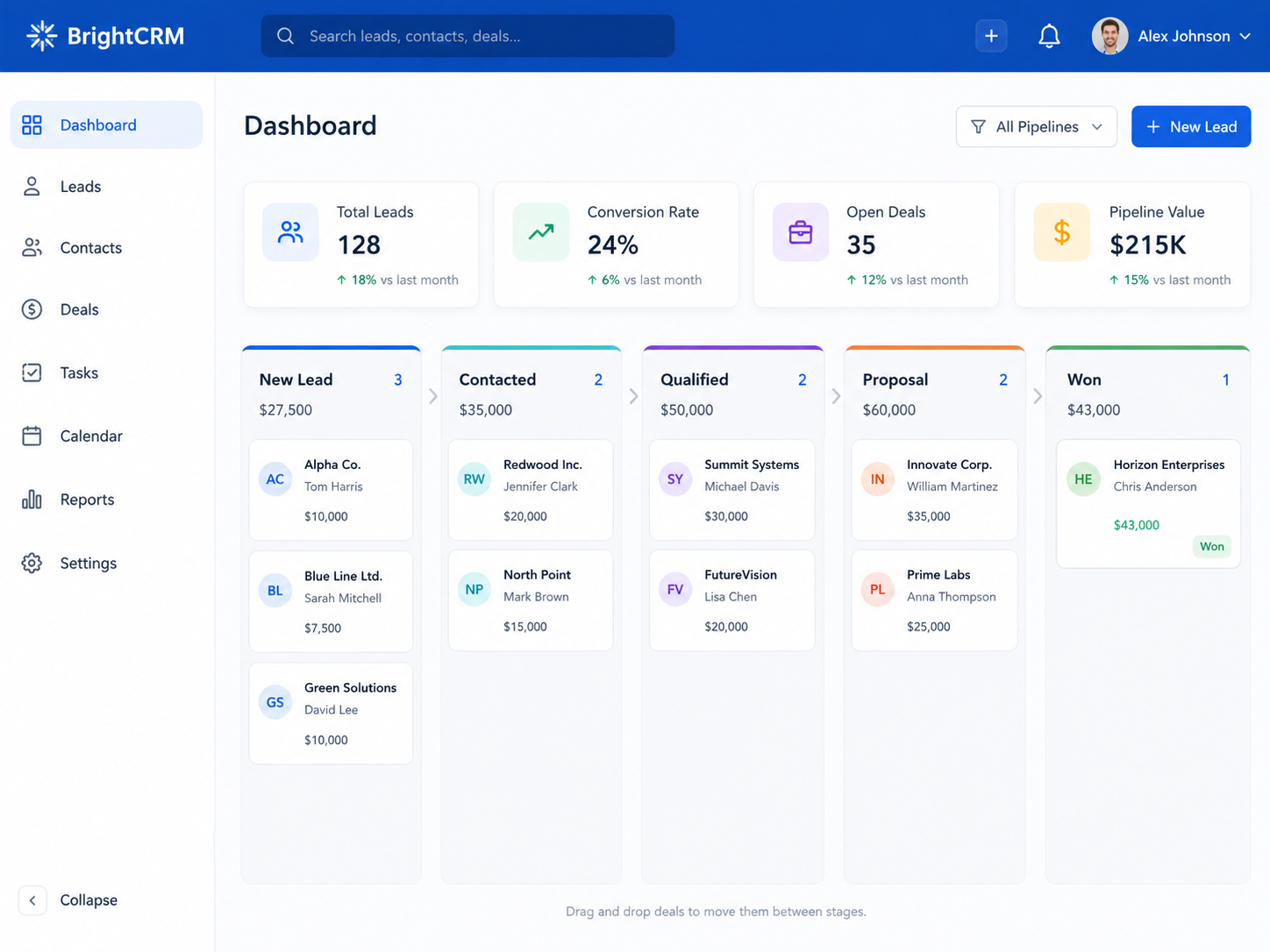
Most small business owners avoid getting a CRM for years because the word conjures up something built for a fifty-person sales floor. That reputation is mostly deserved, most CRM software is built for teams far bigger than the one that will use it. But a CRM does not have to be complicated to work. It just has to do the right few things well.
Here is what a genuinely useful setup for a small business actually needs, and the features most SMEs pay for and never touch.
What a small business setup actually needs
Strip away the extras and a working CRM for an SME comes down to four things.
- One place to see every lead. Not three spreadsheets and a notebook, one list everyone on the team looks at.
- A clear stage for each lead. New, contacted, quoted, won, lost. Enough to know where things stand at a glance, not a twenty-stage pipeline nobody remembers to update.
- Follow-up reminders that do not rely on memory. The single biggest reason leads get lost is not bad service, it is someone simply forgetting to follow up on time.
- A record of what was said. A short note against each lead so anyone on the team can pick up a conversation without starting from zero.
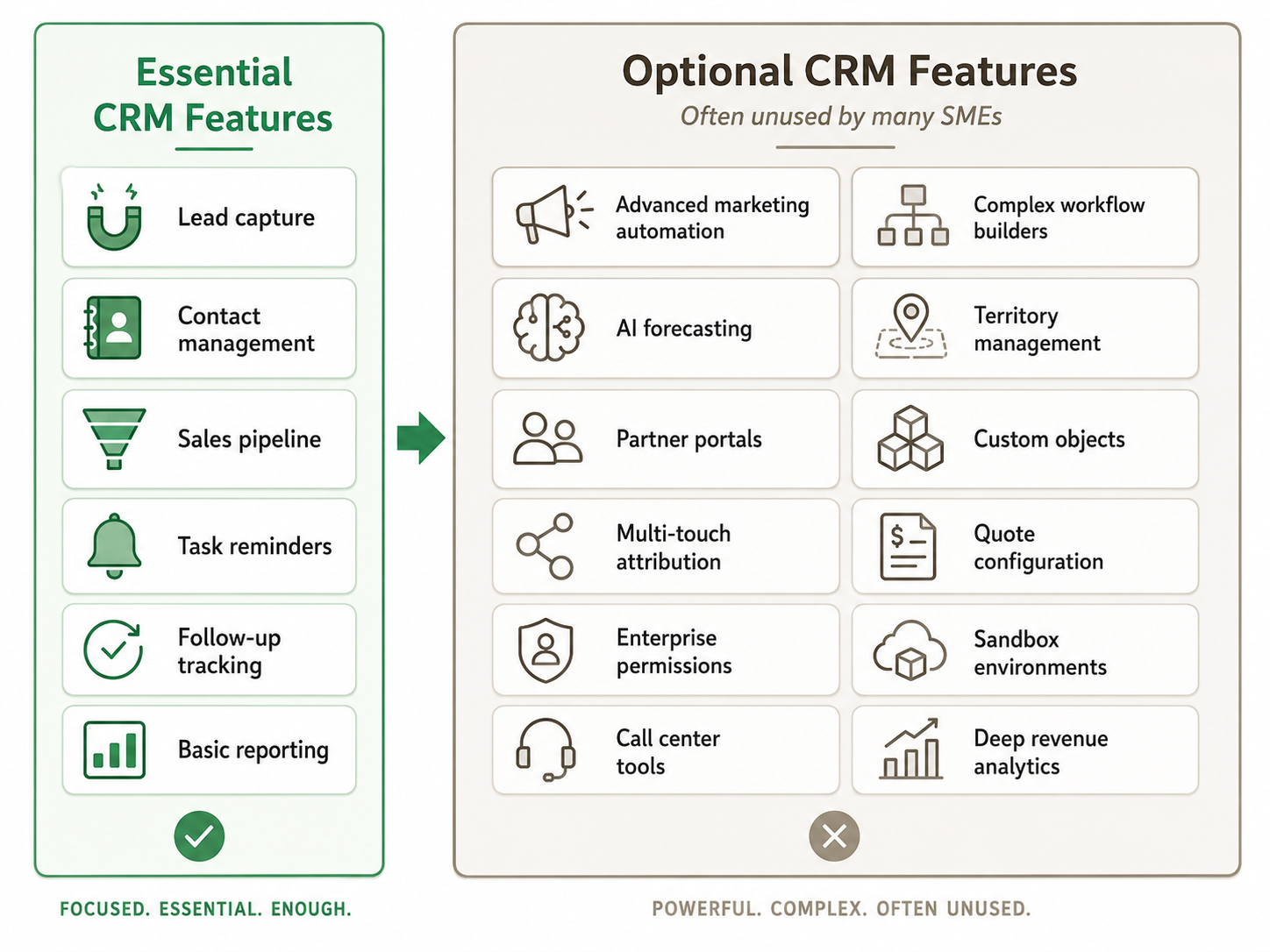
What most SMEs pay for and never use
This is where most CRM budgets get wasted, on features built for sales teams five times the size, with workflows that add setup time and ongoing admin without adding value at SME scale.
Worth having
- Centralised lead list
- Simple pipeline stages
- Automatic follow-up reminders
- Basic contact history and notes
- A dashboard view of what is open, won, and lost
Usually skippable
- Multi-team territory management
- Complex approval workflows
- Custom scoring algorithms
- Deep third-party integrations you will not maintain
- Advanced forecasting models built for large sales teams
None of the items in the second list are useless in general, they are simply built for a stage of business most SMEs have not reached yet. Paying for them now means paying for complexity that slows the team down before it ever gets used.
The right CRM for a small business is not the one with the most features. It is the one the whole team actually opens every day.
Why this matters more than the software you pick
A CRM only works if people use it, and people only use tools that are easy to understand within a few minutes. A setup with forty fields and six required steps per lead gets abandoned within a month, no matter how powerful it is on paper. A setup with five fields and one clear pipeline gets used every single day. For a small team, that difference matters more than any individual feature.
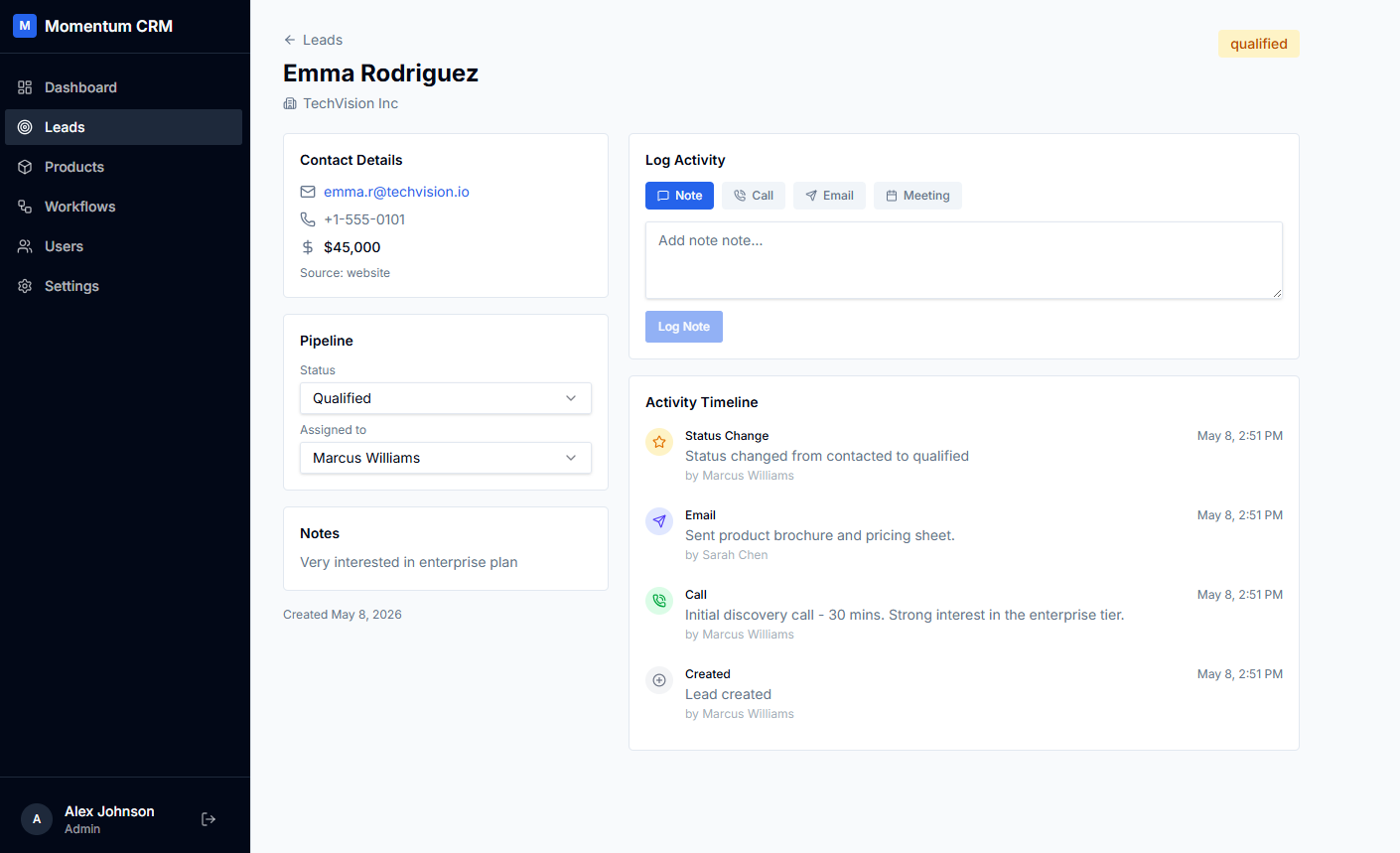
A simple CRM setup should take days to learn, not weeks. If you want to see what one built specifically for SME scale looks like, here is where to start.
See the CRM System